AI Arms Race - Unified Exposure Management Takes Center Stage
Basically, AI is speeding up cyber attacks, so companies need better tools to protect themselves.
The cybersecurity landscape is changing with AI-driven threats. Organizations must prioritize unified exposure management to stay resilient against automated attacks. This shift is essential for effective defense.
What Happened
The cybersecurity landscape is evolving rapidly, driven by the weaponization of Artificial Intelligence (AI). Threat actors, ranging from nation-states to sophisticated criminal enterprises, are automating their attacks. This shift means that traditional defensive strategies are no longer adequate. Organizations must adapt to the increased speed of attacks and the complexity of vulnerabilities.
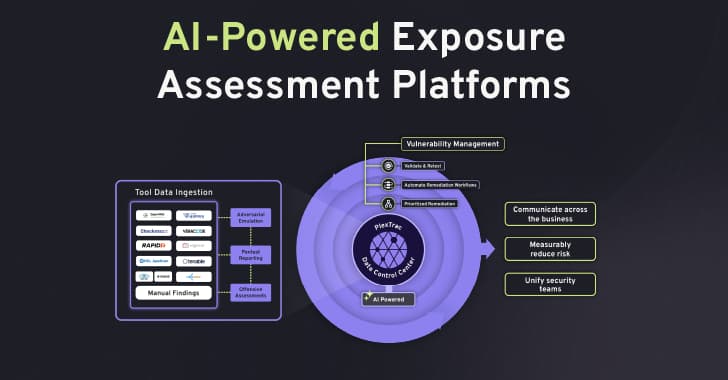
In this new era of digital warfare, the need for Unified Exposure Management has become a boardroom priority. Solutions like PlexTrac are emerging to help organizations streamline their security efforts. By unifying exposure management, remediation, and validation, these tools aim to keep pace with adversaries leveraging AI.
Who's Being Targeted
The modern adversary is not just any hacker; they are equipped with advanced AI tools that enhance their capabilities. For example, threat actors are using generative AI to launch highly targeted phishing campaigns at scale. They can analyze defenses and identify vulnerabilities faster than human operators, leading to more efficient and stealthy attacks.
Perhaps the most concerning development is the rise of polymorphic malware. This type of malware can change its code in real-time, making it difficult for traditional security measures to detect. As a result, organizations are facing threats that are not only faster but also more sophisticated than ever before.
Tactics & Techniques
To combat these advanced threats, organizations need to adopt Autonomous Exposure Assessment and Continuous Threat Assessment powered by Agentic AI. This approach allows security teams to continuously evaluate their exposure and prioritize vulnerabilities that pose the greatest risk.
Moreover, Agentic AI can simulate attack scenarios, functioning as a synthetic red teamer. It can analyze network topology, prioritize targets, and adapt its tactics in real-time, much like a skilled human operator. This capability transforms how organizations approach threat assessment and defense.
Defensive Measures
To stay ahead in the AI arms race, companies must implement proactive measures. This includes using AI-driven tools for automated assessments and predictive insights. By integrating these capabilities into their security infrastructure, organizations can move from a reactive to a proactive stance.
PlexTrac exemplifies this shift by offering features that streamline remediation efforts. For instance, it can automatically generate remediation tickets and orchestrate patch management to ensure vulnerabilities are addressed swiftly. This not only reduces the time to remediate but also enhances overall security posture.
In conclusion, the AI arms race is reshaping the cybersecurity landscape. Organizations that prioritize unified exposure management and leverage AI-driven capabilities will be better equipped to defend against the evolving threats posed by adversaries using AI.